The Laundromat Beat the Coffee Shop: What One Customer Taught Me About Flyers
Quick Answer
A solo real estate agent handed out flyers for three years without knowing if anyone read them. One week of per-location QR tracking rewrote his map — and mine.
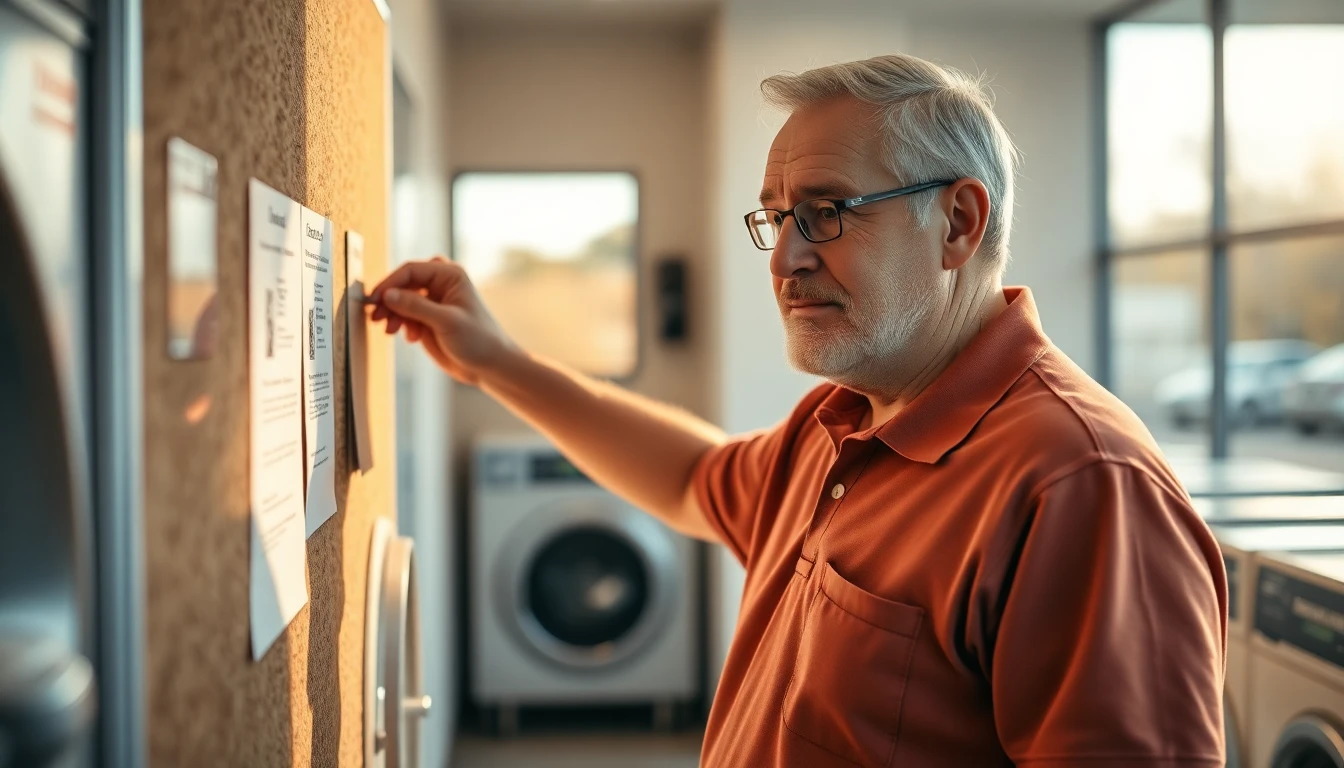
About two months into running OwnQR, a $15 lifetime QR code tool, I got an email from a customer I'll call Tom.
Tom is a solo real estate agent working a suburb outside Vancouver. He'd moved to Canada about three years before that email. English wasn't his first language, though his emails were always careful and warm. He got his real estate licence shortly after arriving. He didn't have a warm network to lean on the way other agents do — no family already in the industry, no extended community of friends buying their first homes, none of the referral scaffolding that makes real estate work for people who grew up in the neighbourhood they sell. He had paper flyers, a rented car, and a long list of streets to walk.
He'd bought OwnQR, built a single dynamic QR code, printed it on a stack of flyers, and was handing them out at his usual spots — a coffee shop, a yoga studio, a community centre, a laundromat, and the auto repair shop next to his office.
His email was short and specific. He wanted to know: was there any way to tell which of those five places was actually working?
I read the email twice. I had not really thought about his kind of business before. I'd been building features for marketers and event organisers — people with spreadsheets and attribution tools. Tom was a guy with a paper stack and a car, working a city he'd been living in for three years and still didn't quite feel like he belonged in. He had been dropping flyers into that city for those three years, and in three years he had never once received a signal back about whether anyone was reading them.
The thing I kept thinking about
Most software tools are sold into organisations that already have feedback loops. A marketer running a campaign has a dashboard. A SaaS company has a funnel. The baseline assumption of modern software is that you can see the effect of what you do.
Tom didn't have that. He had a year-after-year intuition that the coffee shop was his best spot because of the demographic that went there — professionals in the morning, working families on weekends. His entire flyer distribution strategy was built on a story he had been telling himself, with no data that could contradict it, about a city whose social fabric he was still learning.
The flyer wasn't a marketing choice for Tom in the way it is for an established agent with a database. The flyer was his only real option. He couldn't work warm leads because he didn't have warm leads. He couldn't lean on a family reputation because his family's reputation didn't exist in the place he was selling. Paper and shoe leather were what he had.
I wrote back and explained what he actually wanted, which was very simple. He could create five different dynamic QR codes, one per location, all pointing to the same landing page on his website. Each code tracks its own scans. A week or two of distribution and he'd have his answer.
He replied within an hour. Two days later he'd rebuilt the flyer with five variants — one per location — and started distributing.
The numbers
About two weeks in, Tom emailed again. The subject line was "This can't be right."
The laundromat was outperforming the coffee shop by roughly three to one. The auto repair shop was second. The yoga studio — which he'd always assumed was his sharpest match for upscale listings — came in last.
What got me was the second paragraph of his email. I'm paraphrasing because I don't have permission to quote directly, but the spirit of it was this:
I've been putting flyers in that coffee shop for three years. I told myself a story about the type of client who drinks a $6 latte. It turns out my clients are doing laundry on Saturday morning. Young families, people between shifts. I was standing in the wrong neighbourhood of my own city in my head.
He wasn't writing to thank me for the tool, exactly. He was writing because a fact about his own business had just been handed to him for the first time, and the fact was different from the story he had been using to organise his work. He had been, in his own phrasing, imagining a version of his clients from somewhere else — not the ones who actually lived in the blocks he walked every week.
What this changed for me
I had been building OwnQR with a certain image of the customer in my head — small marketing teams, event organisers, restaurants printing menus. Tom was none of those. He was a single person who had never seen an analytics dashboard in his life, doing a very old-fashioned kind of work — paper flyers, handshake networking, open houses on Saturdays — in a city where, three years in, he was still figuring out whose business he was actually competing for.
All he wanted was a feedback loop. That sounds small. It is not small. In most industries a feedback loop is assumed; you get it free with the tools you're already using. In Tom's industry, at Tom's scale, without the social scaffolding most agents lean on, no one had built him one. The closest thing he had was asking a new client how they'd heard of him, which is lossy data at best and mostly pleasantries.
A dynamic QR code isn't a sophisticated analytics platform. It's the most primitive possible feedback loop: did someone scan this, yes or no, how many times, from where. For most of the customers I'd had in my head when building the product, that's a rounding error on top of the dashboards they already have. For Tom it was the first time his flyers had talked back.
Want to follow along? Create a QR Code Generator now
It's free to start. Upgrade to $15 lifetime when you need editable dynamic QR codes.
The broader point
I've thought about this email more than any other I've received from a customer. Not because the story is dramatic — it isn't. A guy moved his flyers around. That's all that happened. But the shape of what happened has stayed with me.
The common story about small business tools is that they democratise things big companies have. A storefront builder democratises the e-commerce capability of a big retailer. An email platform democratises the marketing operation of an enterprise. That framing is mostly correct, but it misses something.
What actually democratises slowly is the feedback loop itself. The big company has always known which store location sells the most; the new-to-the-country realtor has never known which community bulletin board gets read. The data infrastructure exists in one and not the other, and the reason isn't that the small realtor doesn't deserve it. It's that nobody has bothered to package it at his scale and price point.
A $15 QR code tool that gives a flyer-delivery business its first-ever per-location feedback is a very specific, very small instance of that gap closing. I don't want to oversell it. Tom is one person. But the shape of the email keeps showing up in my inbox from different industries and different corners of the world: someone doing analog work in a context without warm networks, who has never had a signal back about whether it was working.
The part I got wrong
When I built OwnQR I thought of dynamic QR codes as a marketing feature. Real-time analytics, A/B tests on destinations, cohort analysis. The kind of thing an SMB marketing team would find useful.
Tom's use wasn't a marketing use in that sense. It was a simple decision-support use. Where should I walk tomorrow. He didn't need cohort analysis. He needed five numbers. The tool gave him five numbers, and that was the whole value.
Most of the features I'd been prioritising for my next release were features Tom would never use. That's not a criticism of the features. It's a reminder that I was solving problems for the customer I'd pictured, not for the customer who was actually buying the product — and the customer actually buying it was often someone without the network advantages I'd quietly assumed everyone had.
Since that email I've spent more time reading support threads and less time reading feature request documents. The customer I'd been building for does exist. He is not the only customer, and he is not always the most interesting one, but he is the one who uses the tool the way I think tools should be used — to see something about their own work they couldn't see before.
What happened to Tom
Tom moved his Saturday morning flyer route. The coffee shop still gets a smaller stack, out of a kind of loyalty to three years of habit, but the laundromat and the auto repair shop get most of them now. He told me in a follow-up email that his call volume from new leads went up in the weeks after the change, though he's too honest a person to claim causation. Something shifted, he said.
I have never met Tom in person. I don't know what he looks like. I don't know how his business is doing a year on. What I have is an email archive that contains one of the clearest explanations I've ever read of why a small, boring tool can matter for someone who doesn't have the network other people take for granted.
Three years of flyers without knowing if anyone was reading them. One week with a feedback loop.
That is the whole story, and I keep coming back to it.
Max Liao runs OwnQR, a US$15 one-time editable QR code tool. He writes about indie SaaS, customer stories, and the unsexy tools that matter to small businesses building themselves from scratch. Find more posts on the OwnQR blog. Tom's name has been changed.
Tags
Frequently Asked Questions
Why use different QR codes for different flyer locations instead of just one?
A single QR code gives you a total scan count but no breakdown by source. If you print the same code on five different stacks of flyers, you cannot tell which distribution location is driving engagement. Five separate dynamic QR codes — one per stack — all pointing to the same landing page give you a per-location scan count, which is the actual decision you need to make: where to spend your time tomorrow.
How many scans does it take to get useful signal from flyer distribution?
Less than you would expect. In a bursty distribution channel like flyers, differences between locations tend to be large — 3x or more — so even a modest total scan volume over two weeks will separate signal from noise. If two locations are within 20 percent of each other, treat them as a tie and look at other factors (cost, time spent, relationships). If one is 3x another, the data is telling you something real.
What if my business distributes flyers across dozens of locations?
The same principle scales, but you will want to group locations into clusters rather than track each one individually. A real estate agent hitting 30 open-house neighbourhoods might group into 5-6 zones (by demographic or geography). One dynamic QR code per zone, with clear printed labels so you know which stack to grab. Precision beyond that tends to fragment the data in ways that make it harder, not easier, to act on.
Do I need to reprint my flyers every time I change the destination URL?
No — that is the whole point of dynamic QR codes. The printed code is a permanent pointer; the destination URL is an editable field in the dashboard. A real estate agent can change the landing page at the start of every listing season without touching a single printed flyer. Static QR codes (which encode the URL directly) would require reprinting; dynamic QR codes do not.
What industries benefit most from per-location QR code tracking?
Any business whose marketing involves physical distribution with more than one drop-off point and where the rate of conversion is too low or too delayed to track by memory. Real estate, home services, independent trades, community organisers, small retailers running in-store promotions, and musicians distributing gig posters all fit. What they share is that they've been working blind for years because no one has packaged an analytics layer for their scale. A dynamic QR code is a primitive but real feedback loop.
Ready to own your QR codes?
One-time $15 for lifetime dynamic QR codes.
Most alternatives bill monthly — verify current rates on their site.
Digital purchases are generally final — see Refund Policy