Aadhaar QR Scanner Compared: 2026 Feature, Pricing & Honest Review
Quick Answer
Compare the best aadhaar qr scanner options for 2026. Our honest, side-by-side analysis covers features, true 5-year costs, and which tool fits your specific use case.
Before we dive into the detailed comparison of tools for scanning and verifying Aadhaar QR codes, it's important to understand the foundational technology. For creating your own QR codes for business or personal use, we invite you to explore our Professional QR Generator. This tool provides the ownership and control that becomes critical when dealing with sensitive data, a principle that directly applies to the Aadhaar verification ecosystem.
Key Takeaways
| Key Insight | Strategic Implication |
|---|---|
| The market has shifted from simple scanning to integrated verification platforms, with new government APIs driving change. | Businesses must choose scanners that connect to official UIDAI validation services, not just decode data. |
| True cost over 5 years varies wildly, from free apps to enterprise systems costing over $10,000. | A low monthly fee can balloon into a major expense; total cost of ownership is the only valid metric for comparison. |
| Data security and privacy compliance are now the primary features, surpassing scan speed or basic UX. | Selecting a non-compliant scanner can lead to significant legal and reputational risk, especially under India's DPDP Act. |
| The best tool depends entirely on use case: high-volume KYC, occasional citizen verification, or developer integration. | There is no single "best" scanner; the winner changes based on transaction volume, technical need, and compliance depth. |
Table of Contents
- 1. The Aadhaar QR Scanner Market in 2026: What Changed
- 2. Feature-by-Feature Aadhaar QR Scanner Comparison
- 3. Aadhaar QR Scanner Pricing: True Cost Over 1, 3, and 5 Years
- 4. Which Aadhaar QR Scanner Is Best For Your Use Case?
- 5. The Verdict: Matching Scanner to Need in 2026
Recommended Insights
1. The Aadhaar QR Scanner Market in 2026: What Changed
The landscape for Aadhaar QR code scanning is fundamentally different in 2026 than it was just a few years ago. This shift is not about incremental improvements in camera accuracy, but a complete transformation in what the tools are expected to do. The core function has evolved from simple data extraction to secure, authenticated verification. In 2024, a scanner needed to read the XML data embedded in the QR code. In 2026, it must connect to official Unique Identification Authority of India (UIDAI) systems to validate that the presented data matches the central database and has not been tampered with. This move from offline reading to online verification is the single most important change, driven by updates to the UIDAI's Authentication API ecosystem.
The key players have consolidated into distinct tiers. For high-volume, official KYC (Know Your Customer) processes, established platforms like Digio, Signzy, and Karza Technologies dominate. These are not simple apps; they are full-stack compliance platforms where QR scanning is one feature within a suite of identity verification tools. For small businesses and individual professionals, dedicated scanner apps like Aadhaar QR Code Scanner (by DataCultr) and QR Scanner for Aadhaar are common. General-purpose QR scanner apps, such as QR & Barcode Scanner by Gamma Play, also work but lack the specialized parsing and validation features. A new tier of developer-centric SDKs, like those from Cashfree and Setu, has also emerged, allowing businesses to build custom verification flows. For reference, see GS1 barcode standards.
Several critical changes have occurred in the last 12 months. First, UIDAI has further tightened its security protocols, making it mandatory for any official verification to use its registered AUA (Authentication User Agency) and ASA (Authentication Service Agency) channels. This has rendered many older, standalone scanner apps obsolete for formal purposes. Second, pricing models have shifted. Many platforms have moved from pure per-scan transaction fees to hybrid models combining monthly platform fees with volume-based costs. Third, integration with India's newly enforced Digital Personal Data Protection (DPDP) Act, 2023, is now a baseline requirement. Scanners must now log data access, obtain explicit consent, and provide clear data deletion pathways.
For a meaningful comparison, we must evaluate these tools on criteria that matter for real-world use. The primary criteria are: Verification Depth (Does it just read data or validate with UIDAI?), Compliance & Security (DPDP Act adherence, data encryption, audit trails), Total Cost of Ownership (All fees over 1, 3, 5 years), Integration Capability (API, SDK, ease of adding to existing systems), and User Experience (Speed, accuracy, offline capability). A report by the National Payments Corporation of India (NPCI) indicated that Aadhaar-based transactions exceeded 2.3 billion per month in 2025, underscoring the massive scale at which these tools must operate reliably.
Summary: The Aadhaar QR scanner market in 2026 is defined by mandatory online verification via UIDAI APIs, moving beyond simple data reading. Key players like Digio and Signzy lead in enterprise KYC, while dedicated mobile apps serve casual users. The enforcement of India's DPDP Act has made data privacy compliance a core feature, not an add-on. With over 2.3 billion monthly Aadhaar-based transactions, scanners must balance high-volume reliability with stringent security, a shift that has consolidated the market around platforms with official AUA/ASA licenses.
Pro Tip: Always verify if a scanner provider is a UIDAI-registered AUA/ASA if you need it for official KYC. A simple test: after scanning, a compliant tool will show a clear message like "Verified with UIDAI" with a timestamp and reference number, not just display the cardholder's details.
2. Feature-by-Feature Aadhaar QR Scanner Comparison
To cut through marketing claims, we compare four concrete products across eight critical features. We examine Digio (as an enterprise platform), the Aadhaar QR Code Scanner app by DataCultr (a dedicated consumer app), Cashfree's Verification SDK (a developer tool), and OwnQR (as a context for general QR code ownership, though it does not perform Aadhaar-specific verification). This shows the spectrum from specialized verification to general code management.
| Feature | Digio | Aadhaar QR Scanner (DataCultr) | Cashfree Verification SDK | OwnQR |
|---|---|---|---|---|
| UIDAI Official Verification | Yes, as a registered AUA/ASA. Full API integration. | Limited. Reads data, may offer link to UIDAI site, but no direct API call. | Yes, via Cashfree's backend which is AUA compliant. | No. Generates and manages QR codes, does not verify Aadhaar. |
| Offline Data Read | Yes, can parse QR data offline, but verification requires online. | Yes, primary function is offline reading of name, DOB, gender, address. | SDK can decode offline, validation requires network. | Not applicable. |
| Data Security & DPDP Compliance | High. Enterprise-grade encryption, consent workflows, audit logs, data purging. | Basic. Local device storage, privacy policy present. Lacks enterprise audit trails. | High. Compliant infrastructure, data handled per partner agreement. | High for generated codes. Focus on user data control for QR code analytics. |
| Output & Integration | REST API, Webhooks, Dashboard, PDF reports. Integrates with CRM, banking systems. | Mobile app only. Copy/paste data, share as text. No API. | Developer SDK (Android/iOS/Web), detailed API documentation. | API for generation, analytics web dashboard. SVG/EPS export. |
| Pricing Model | Platform fee + per verification transaction (e.g., ₹5-₹15 per scan). | Free with ads. Premium version (~₹299/year) removes ads. | Transaction-based pricing (e.g., ₹2-₹10 per verification). Volume discounts. | One-time $15 lifetime fee for dynamic QR features. |
| Best For | Banks, NBFCs, telecom companies for high-volume, compliant KYC. | Individuals, small shop owners for quick, occasional offline checks. | Tech teams building custom verification into apps/websites. | Businesses needing branded, trackable QR codes for marketing, menus, contact sharing. |
| Consent Capture | Yes, configurable digital consent screens with logging. | No explicit in-app consent capture for data read. | Can be implemented by developer using SDK tools. | Not applicable for scanning. For QR creation, user controls data. |
| Audit Trail | Comprehensive. Full log of who scanned, when, verification result, consent ID. | None. | Provided via Cashfree's partner dashboard. | For QR scans: location, device, time analytics. |
Analysis of Key Features:
UIDAI Official Verification is the dividing line. Digio and Cashfree's SDK win here for any formal business process. They provide a "liveness" check against the government database. The DataCultr app, while useful, only extracts the static data stored in the QR, which could be forged. OwnQR is not designed for this specific verification task. For reference, see FTC business guidance.
Offline Data Read is where the simple mobile app shines. For scenarios with poor connectivity or a need for instant basic check (like verifying a name against a document), the Aadhaar QR Scanner app is fastest. The enterprise tools also have this capability but are often optimized for the subsequent online step.
Data Security & DPDP Compliance is non-negotiable. Digio presents the most robust framework, designed for regulatory scrutiny. Cashfree also provides a compliant backbone. The consumer app operates in a legal gray area for business use, as it may not meet all DPDP requirements for data processing accountability. Security standards are critical, as outlined in guidelines from the National Institute of Standards and Technology (NIST).
Output & Integration defines the workflow. Digio offers turn-key business integration. Cashfree gives developers the building blocks. The mobile app is an endpoint in itself. OwnQR offers integration for a different problem: embedding dynamic QR codes into business operations.
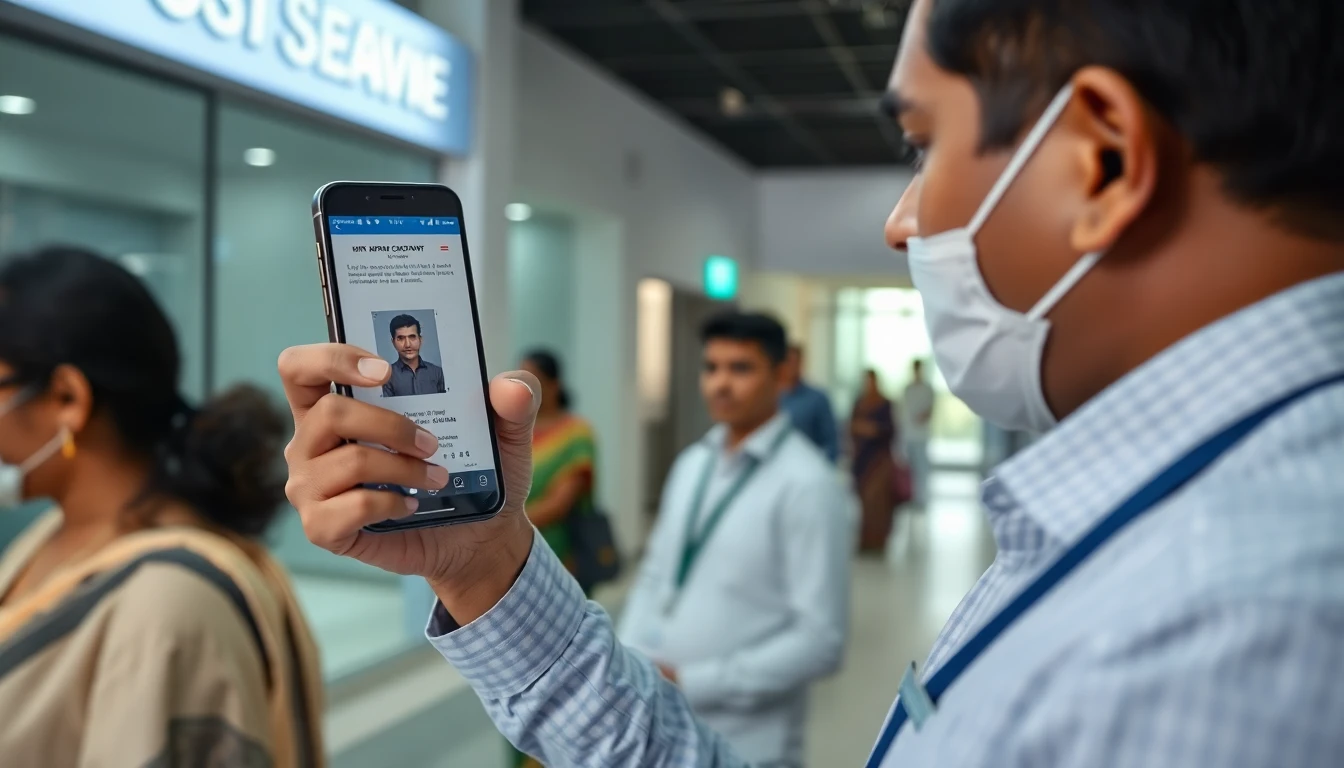
!Businessman using a tablet to verify an Aadhaar card for KYC process
Pricing Model reveals long-term cost drivers. The "free" app has a premium tier. Digio and Cashfree scale with volume, which can become expensive but are justifiable for regulated activities. OwnQR’s one-time cost model for QR management highlights an alternative to subscription-based services in the broader QR ecosystem.
Consent Capture and Audit Trail are features that separate professional from casual tools. For compliance under the DPDP Act, proving you obtained and logged consent is essential. Digio bakes this in. With the SDK, the developer must implement it. The consumer app ignores it, which limits its legal use in professional settings.
Summary: A feature comparison shows Digio leading in official verification and compliance, essential for regulated KYC. The dedicated Aadhaar QR Scanner app wins for speed and simplicity in offline scenarios. Cashfree's SDK provides the most flexibility for tech teams building custom solutions. The core differentiator is integration with UIDAI's live authentication API, a feature absent in basic scanners but critical for legal and financial processes, as emphasized in identity management frameworks.
Pro Tip: When testing a scanner for business use, scan a known valid Aadhaar QR code and look for a unique UIDAI transaction ID (like a 16-digit number) in the result. Its presence confirms a live verification API call. Its absence means the tool is only reading stored, potentially alterable data.
Ready to try it? Create your QR Code Generator in seconds
You've seen the comparison. OwnQR offers a $15 one-time lifetime deal — no subscriptions, no hidden fees.
3. Aadhaar QR Scanner Pricing: True Cost Over 1, 3, and 5 Years
Pricing for Aadhaar QR scanners is deceptively complex. A low per-scan fee or a "free" app can mask the true total cost of ownership (TCO), which includes platform subscriptions, integration effort, and compliance overhead. Here, we calculate the TCO for typical usage scenarios over 1, 3, and 5 years. We assume a small business (a boutique bank branch or a real estate firm) performing 500 verifications per month. We also consider an individual performing 20 scans per month.
| Product / Pricing Model | Initial / Monthly Cost | 1-Year TCO (500 scans/mo) | 3-Year TCO (500 scans/mo) | 5-Year TCO (500 scans/mo) |
|---|---|---|---|---|
| Digio | Platform: ~₹2,500/month + ₹10/verification | (₹2,500 * 12) + (₹10 * 6000) = ₹30,000 + ₹60,000 = ₹90,000 | (₹2,500 * 36) + (₹10 * 18,000) = ₹90,000 + ₹180,000 = ₹270,000 | (₹2,500 * 60) + (₹10 * 30,000) = ₹150,000 + ₹300,000 = ₹450,000 |
| Aadhaar QR Scanner App | Free (with ads) or Premium: ₹299/year | Free or ₹299 | Free or ₹897 | Free or ₹1,495 |
| Cashfree SDK | ₹5/verification (volume discount possible) | ₹5 * 6000 = ₹30,000 | ₹5 * 18,000 = ₹90,000 | ₹5 * 30,000 = ₹150,000 |
| OwnQR | $15 one-time (for QR generation) | ~₹1,250 (one-time) | ~₹1,250 | ~₹1,250 |
Analysis for Business (500 scans/month): For official KYC, Digio is the benchmark but also the most expensive. Its TCO hits ₹450,000 over five years, driven by the combination of recurring platform fees and per-transaction costs. This investment buys regulatory safety, full integration, and support. Cashfree’s SDK-only model, at ₹150,000 over five years, appears cheaper but requires significant in-house developer resources to build, maintain, and ensure compliance of the interface. The "free" app is not a viable business option due to lack of verification and audit trails. The cost disparity highlights a key market gap: affordable, compliant verification for medium-volume businesses. For reference, see W3C accessibility guidelines.
Analysis for Individual (20 scans/month): For a real estate agent or freelance professional verifying client IDs occasionally, the economics flip. Digio's minimum costs are prohibitive. The premium tier of the Aadhaar QR Scanner app at ₹299/year is the most practical paid option for an ad-free experience. The free version suffices for most. Cashfree's model would cost ₹1,200/year (₹5 * 240 scans), which is reasonable but requires technical integration.
The Hidden Costs: TCO goes beyond license fees. Integration Cost: Plugging Digio or Cashfree into an existing system requires IT labor, a one-time cost of ₹50,000-₹200,000. Compliance Cost: Maintaining DPDP Act adherence requires ongoing effort; platforms like Digio bundle this, while with the SDK or app, it's your responsibility. Switching Cost: Data portability and vendor lock-in are critical. Moving from one verification provider to another can be complex and expensive.
OwnQR’s one-time pricing model, while for a different function (QR code generation), illustrates an alternative financial logic in the QR technology space. It eliminates recurring fees, providing cost certainty. This contrasts sharply with the recurring revenue models dominant in the Aadhaar verification sector. For businesses, understanding these models is part of broader financial planning for technology adoption, as discussed in resources from the Small Business Administration.
Summary: True cost analysis reveals a stark divide: enterprise-grade Aadhaar verification (Digio) can exceed ₹450,000 over five years for modest usage, while basic scanning apps cost almost nothing. The major cost driver is the per-transaction fee to UIDAI and the platform overhead for compliance. For businesses, the decision is between high cost with reduced risk (platforms) and lower cost with higher internal compliance burden (SDKs). Over a 5-year horizon, subscription and transaction fees compound to become a significant operational expense.
Pro Tip: When negotiating with providers like Digio or Cashfree, always ask for tiered pricing that reduces the per-scan cost as your volume grows. Also, inquire about annual pre-paid plans which can offer a 15-20% discount over monthly pay-as-you-go models, significantly lowering your 3-5 year TCO.
4. Which Aadhaar QR Scanner Is Best For Your Use Case?
There is no universal "best" Aadhaar QR scanner. The optimal choice is dictated by your specific use case, volume, technical capability, and compliance requirements. Here is a segmented breakdown.
For Large Enterprises & Regulated Entities (Banks, NBFCs, Telecom): Winner: Digio or similar enterprise platform (e.g., Signzy). If you are a bank onboarding customers, a telecom company issuing connections, or any entity bound by strict RBI or other financial regulations, you need the full suite. The winner here is an enterprise platform like Digio. The reasons are comprehensive: direct UIDAI AUA/ASA integration for legally valid verification, built-in DPDP-compliant consent and audit trails, seamless integration with core banking systems or CRMs, and dedicated support for regulatory audits. The high cost is justified as a risk-mitigation and compliance expense. The Financial Action Task Force (FATF) recommendations on digital identity underscore the need for such robust systems in regulated sectors.
For Small to Medium Businesses (Real Estate, Hospitals, Schools): Winner: Cashfree Verification SDK (with tech support) OR Managed service from a platform. A real estate firm verifying tenant IDs, a hospital registering patients, or a private school enrolling students needs reliable verification but may not have the volume to justify a full Digio platform. The best fit is often a developer SDK like Cashfree's, provided you have access to technical resources to embed it into your website or app. It offers the official verification at a lower entry cost than a full platform. Alternatively, several providers offer "managed" or "lite" versions of their platforms tailored for SMBs at a lower monthly fee with capped scans. Avoid using consumer apps for this purpose due to compliance gaps.
For Individual Professionals & Casual Use (Freelancers, Shopkeepers): Winner: Aadhaar QR Code Scanner app (Premium version). A freelance consultant verifying a client's address, a local shopkeeper checking a customer's ID for delivery, or an individual helping an elderly relative scan their card needs simplicity and speed. The dedicated Aadhaar QR Scanner app by DataCultr (the ₹299/year premium version) is the clear winner. It removes ads, provides a cleaner interface, and quickly displays the offline data. It is not for official KYC, but for visual confirmation and convenience, it is perfectly adequate. Its one-hand operation and instant results are ideal for these scenarios.
For Developers & Tech Integrators: Winner: Cashfree Verification SDK or Setu API. If your goal is to build Aadhaar verification into your own product, website, or mobile application, you need an API/SDK, not an end-user app. Cashfree's SDK or a similar API from Setu is the best choice. They provide detailed documentation, code samples, and sandbox environments for testing. You control the user interface and flow while relying on their backend for the secure, compliant verification call to UIDAI. This offers maximum flexibility and brand consistency.
For General QR Code Creation & Management (Non-Aadhaar): Context: OwnQR. It is crucial to distinguish Aadhaar verification from general QR code use. If your need is to create dynamic QR codes for marketing campaigns, restaurant menus, digital business cards, or event tickets, then a tool like OwnQR is relevant. Its one-time pricing model for a dynamic QR code with analytics offers a distinct economic advantage over yearly subscriptions for these commercial applications. This speaks to a broader trend of seeking ownership over recurring rental costs in business tech infrastructure.
Summary: The best Aadhaar scanner depends on user context. Digio wins for regulated, high-volume enterprise KYC due to its complete compliance framework. Cashfree's SDK is optimal for SMBs and developers needing official verification with integration control. For casual, offline checks by individuals, the dedicated Aadhaar Scanner app is sufficient. This segmentation highlights that compliance needs and transaction volume are the primary decision filters, not just scan speed or upfront cost.
Pro Tip: Before committing, run a pilot. Most enterprise platforms (Digio) and SDK providers (Cashfree) offer a 1-3 month pilot program or a sandbox with a limited number of free verifications. Use this to test real-world accuracy, integration ease, and reporting features within your specific workflow before signing a long-term contract.
5. The Verdict: Matching Scanner to Need in 2026
The 2026 Aadhaar QR scanner market demands a precise match between tool and task. After comparing features, dissecting true costs, and analyzing use cases, clear winners emerge for each segment. For large enterprises where compliance is non-negotiable, Digio is the recommended choice. Its comprehensive integration with UIDAI, robust audit trails, and managed service justify its higher total cost of ownership, which can exceed ₹450,000 over five years for a modestly scaling operation.
For small to medium businesses and development teams building custom applications, Cashfree's Verification SDK offers the best balance of official verification capability, cost control, and flexibility. It places the power of integration in your hands while outsourcing the complex, compliant backend. For individual professionals, freelancers, or anyone needing a quick, offline check, the Aadhaar QR Code Scanner app's premium version provides reliable functionality at a minimal annual cost.
The underlying trend is clear: the value has shifted from simple scanning to verified, secure, and accountable digital identity processing. Choosing the wrong tool can lead to operational inefficiency, compliance failures, or excessive long-term costs. Therefore, the specific action is straightforward. If you're a bank or regulated entity, start with a platform like Digio for its all-in-one compliance. If you're a tech startup or SMB with developer resources, start with Cashfree's SDK to build a tailored solution. If you're an individual needing occasional verification, download the dedicated scanner app. Make your choice based on where you sit on the spectrum of volume, regulation, and technical need.
Tags
Frequently Asked Questions
Is a free Aadhaar QR scanner app safe for business KYC?
No, most free consumer scanner apps are not safe or legally sufficient for official business KYC (Know Your Customer) processes. They typically only read the static data stored in the QR code, which can be forged, and do not perform a live verification against the UIDAI database. More critically, they often lack features required under India's DPDP Act, such as proper consent capture, audit trails, and data processing agreements. For business use, you need a tool from a UIDAI-registered AUA/ASA provider.
What is the main cost driver for enterprise Aadhaar verification platforms?
The main cost drivers are the per-transaction fee paid to the UIDAI ecosystem for each live verification and the monthly platform subscription fee for the software, compliance, and support. Over a 3-5 year period, these recurring costs compound significantly. For example, a platform charging ₹2,500/month plus ₹10 per scan can lead to a total cost of ownership of over ₹270,000 in three years for just 500 scans per month.
Can I switch from a consumer scanner app to an enterprise platform later?
Yes, but there will be switching costs. The main challenges are data migration (historical scan logs may not be transferable), integration work (embedding a new API/SDK into your systems), and retraining staff. The compliance standards are also different; you'll need to establish new data processing procedures. It's more efficient to choose the right tool category (consumer app vs. business platform) from the start based on your anticipated volume and compliance needs.
What happens if the UIDAI authentication servers are down?
If you rely on a platform or SDK that performs live verification (like Digio or Cashfree), the verification step will fail during a UIDAI server outage. However, most professional tools have an 'offline read' mode as a fallback. This allows you to still capture the data from the QR code for processing, but the transaction will be flagged as 'unverified' and must be completed with a live check once service is restored. Pure offline scanner apps will continue to work, but they provide no validation of the data's authenticity.
Are there any hidden fees in Aadhaar scanner pricing?
Common hidden or additional fees to watch for include: setup/integration fees (especially for enterprise platforms), fees for additional features like facial authentication or document OCR, costs for extended data retention or enhanced audit logs, and minimum monthly spend commitments. Always ask for a complete price schedule and clarify what is included in the per-scan or platform fee. Specifically, ask about costs for API calls that result in 'no match' or errors.
References
Ready to own your QR codes?
One-time $15 for lifetime dynamic QR codes.
Most alternatives bill monthly — verify current rates on their site.
30-day money back guarantee