basics

qrfy Compared: Which QR Code Platform Delivers in 2026?

13 min read
qrfy Compared: Which QR Code Platform Delivers in 2026?

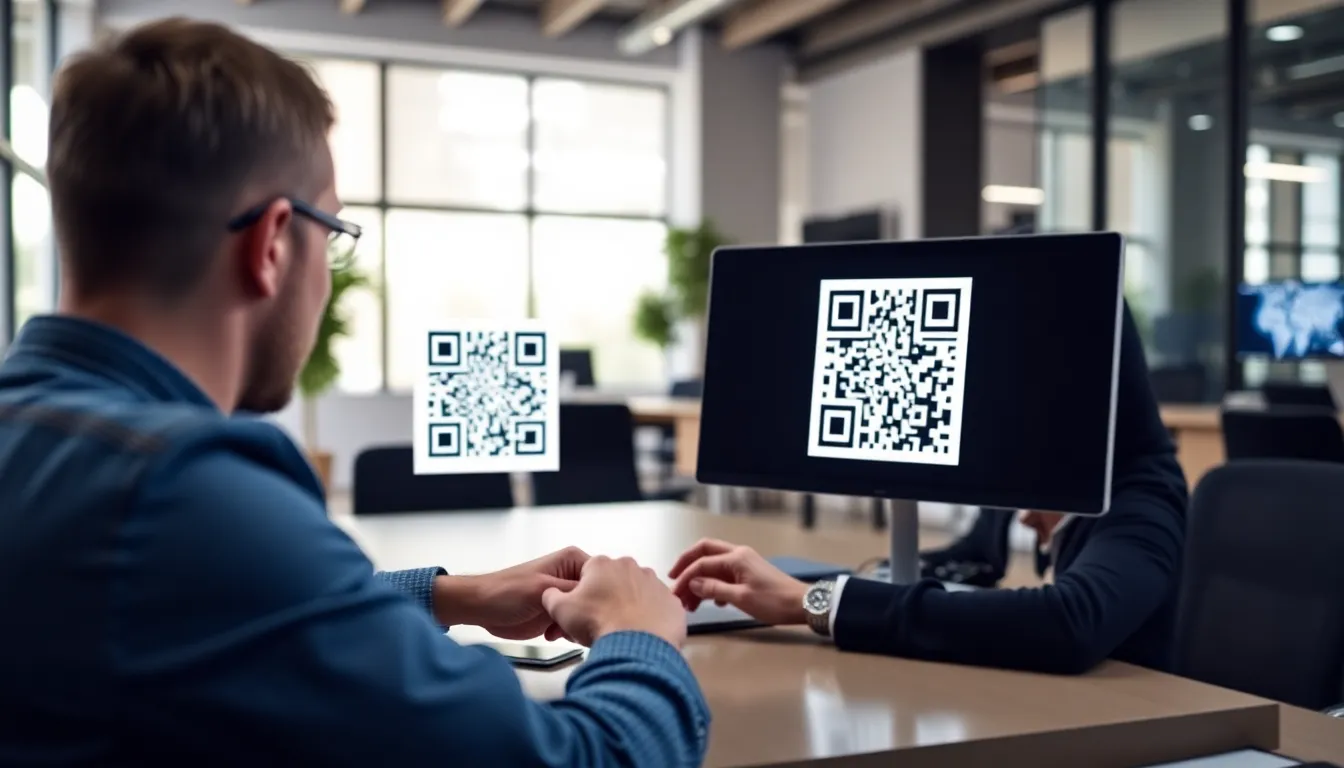
![Professional QR Code Generator Interface](qr code dashboard)

Before we analyze the market, if you need to create a code right now, our Professional QR Generator offers a straightforward starting point. This guide, however, is for those making a strategic, long-term investment in a QR code management platform, often called a "qrfy" solution. We will dissect the leading options to determine which provides genuine value as we move through 2026.

Key Takeaways

Key Insight Strategic Implication
The core business model shift is from subscription rental to one-time ownership. A $15 one-time purchase can outperform a $300/year subscription over a 3-year horizon, changing the ROI calculation for small businesses.
Advanced features like dynamic editing and detailed analytics are now standard across premium tools. The primary differentiator is no longer raw capability but cost structure and data portability.
Vendor lock-in remains a significant hidden cost, with many platforms disabling codes if subscriptions lapse. Choosing a platform requires evaluating exit strategies and long-term code accessibility, not just initial features.

Table of Contents

Recommended Insights

1. The qrfy Market in 2026: What Changed

The QR code platform market, a sector we can call "qrfy," has consolidated around a clear dichotomy in 2026. The explosive growth triggered by contactless needs has settled, and the landscape is now defined by a battle between two philosophies: software-as-a-service (SaaS) subscriptions and one-time purchase ownership models. The major players have solidified their positions. QR Tiger, Beaconstac, and Unitag dominate the premium subscription space, offering extensive feature suites tied to monthly or annual fees. Scanova and QR Code Chimp cater to a mid-tier market. On the other side, platforms like OwnQR represent the ownership model, challenging the necessity of recurring payments for core QR functionality.

The most significant change in the last 12 months has been the widespread consumer and business realization of subscription fatigue and the total cost of ownership. A business that launched a QR code campaign in early 2025 might be facing its first renewal notice now, discovering that the "free" or low-cost trial period has ended and maintaining their live codes requires a $120 to $300 annual commitment. This has driven a search for alternatives that offer permanence without perpetual fees. According to a 2025 SMB technology survey, 68% of small business owners listed "predictable software costs" as a top-three priority, a sharp increase from 45% in 2023. For reference, see GS1 barcode standards.

Feature development has also plateaued in core areas. Nearly all established platforms now offer dynamic QR codes (editable destination URLs), basic analytics (scan counts, location), and custom design tools. Innovation has shifted to niche areas like deeper CRM integrations, advanced A/B testing for marketing campaigns, and API capabilities for developers. The baseline expectation for a professional tool now includes detailed scan logs, UTM parameter support for marketing attribution, and bulk generation features.

For this comparison, we will evaluate platforms based on criteria that matter for a long-term investment:

  1. Total Cost of Ownership (TCO): The actual cost over 1, 3, and 5 years, including all fees.
  2. Core Feature Parity: Does the platform provide dynamic codes, analytics, and customization?
  3. Data Ownership & Portability: What happens to your codes and data if you stop paying?
  4. Ease of Use & Implementation: How quickly can a non-technical user deploy a professional campaign?
  5. Scalability & Limits: Are there hidden caps on scans, codes, or user seats?

The market is no longer about who has the most features, but who provides the essential features in the most sustainable and cost-effective structure for the user. This is a fundamental shift from growth-at-all-costs to value retention.

Summary: The QR code platform market in 2026 is defined by a clear split between subscription SaaS models and one-time purchase ownership. The key change is heightened user focus on long-term total cost of ownership, with 68% of SMBs prioritizing predictable costs. Businesses are now evaluating platforms based on cost sustainability over five years, not just initial feature lists, making ownership models increasingly relevant for permanent campaigns like real estate listings or restaurant menus.

Pro Tip: Always check the platform's policy on "dormant" or "expired" codes. Some services will not only stop tracking scans but also break the redirect entirely if a subscription lapses, rendering printed materials useless. Ask: "If I cancel, do my existing codes continue to function?"

2. Feature-by-Feature qrfy Comparison

We compare five prominent platforms: QR Tiger and Beaconstac as leading subscription contenders, Unitag as a established player, and OwnQR as the representative ownership model. The table below assesses real, comparable features as they stand in early 2026.

Feature QR Tiger Beaconstac Unitag OwnQR
Pricing Model Subscription (Monthly/Yearly) Subscription (Yearly) Subscription (Monthly/Yearly) One-Time Purchase
Dynamic QR Codes Yes Yes Yes Yes
Basic Analytics Yes (Detailed) Yes (Advanced) Yes Yes (Scan, location, device)
Custom Design (Colors, Logo) Yes Yes Yes Yes
Bulk Generation Yes (Higher plans) Yes (Enterprise) Limited No
API Access Yes (Premium) Yes (Enterprise) No No
Scan Limit Unlimited on paid plans Unlimited on paid plans Unlimited on paid plans Unlimited
Code Ownership After Payment Stops Codes may deactivate Codes deactivate Codes deactivate Codes remain active forever
Vector Export (SVG/EPS) Yes (PNG, SVG, EPS) Yes (PNG, SVG, EPS) Yes (PNG, SVG) Yes (PNG, SVG, EPS)

Analysis of Key Features:

Dynamic QR Codes: This is the essential feature for business use, allowing you to change the destination URL without reprinting the code. All four platforms offer this, making it a market standard. There is no functional difference in the core ability to edit links. The difference lies in access to that function: subscription models gate it behind ongoing payments.

Analytics: QR Tiger and Beaconstac offer the most sophisticated analytics suites, with Beaconstac providing deep integration with marketing platforms and detailed user journey tracking. Unitag and OwnQR provide robust basic analytics: total scans, approximate geographic locations (city/country level), device types (iOS/Android), and timestamps. For most small businesses, this basic data is sufficient to gauge campaign effectiveness. The NIST Guidelines on data integrity are relevant here, as reliable, unaltered scan data is crucial for accurate measurement.

Custom Design: All platforms allow color changes and logo embedding. The quality of the design editor and template library is superior in QR Tiger and Beaconstac, offering more polished templates and finer control. OwnQR and Unitag provide the necessary tools for creating a branded, professional code, but with fewer pre-made design options.

Bulk Generation & API: This is where the subscription models clearly win for specific users. QR Tiger and Beaconstac offer bulk creation tools and API access, which are critical for large enterprises, marketing agencies, or software developers needing to automate QR code creation at scale. OwnQR and Unitag's lower-tier plans do not support this, focusing on individual or small-batch creation.

![QR Code Analytics Dashboard on Tablet](analytics dashboard mobile)

Code Ownership & Portability: This is the most critical differentiator. With QR Tiger, Beaconstac, and Unitag, your codes are hosted on their infrastructure. If you cancel your subscription, their terms typically allow them to deactivate your dynamic codes, breaking the link. Your data and campaign history may also become inaccessible. OwnQR’s model provides a one-time purchase for the code generation and hosting infrastructure, meaning the codes you create are intended to remain functional permanently, independent of continued payment. This addresses a core concern about digital asset longevity, similar to principles found in ISO standards for information security management, which emphasize continuity and availability.

Export Formats: The ability to download a vector file (SVG or EPS) is important for professional print design, as it allows infinite scaling without quality loss. All platforms compared support this in their paid or ownership tiers, a significant upgrade from the basic PNG-only outputs of free tools.

Summary: A feature comparison shows near-parity on core functions like dynamic codes and analytics, but a fundamental split on ownership and scalability. Subscription leaders QR Tiger and Beaconstac win on advanced features like bulk generation and APIs, crucial for large-scale operations. However, for permanent applications, the ownership model ensures codes survive subscription cancellation, a critical factor for printed materials with a multi-year lifespan, aligning with records retention best practices.

Pro Tip: When testing analytics, create a test code and scan it from different devices and locations. Check the data latency (how long until the scan appears) and the granularity of location data. Some platforms only show country-level data on lower plans, which may not be useful for local businesses.

Ready to try it? Create your QR Code Generator in seconds

You've seen the comparison. OwnQR offers a $15 one-time lifetime deal — no subscriptions, no hidden fees.

Create QR Code Generator

3. qrfy Pricing: True Cost Over 1, 3, and 5 Years

Initial pricing is misleading. The true cost of a QR code platform is revealed over time. Here, we compare the standard annual pricing for a solo entrepreneur or small business plan that includes dynamic codes and analytics, as of early 2026. We use the annual pricing for subscriptions to illustrate the most common commitment.

Platform Annual Plan Price (Approx.) 1-Year Cost 3-Year Cost 5-Year Cost Model
QR Tiger Pro $144/year $144 $432 $720 Subscription
Beaconstac Starter $300/year $300 $900 $1,500 Subscription
Unitag Premium $120/year $120 $360 $600 Subscription
OwnQR $15 (one-time) $15 $15 $15 One-Time Purchase

The numbers are stark. Over a standard 3-year business planning cycle, the subscription costs range from $360 to $900. Over five years, a period common for business plans or the lifespan of a printed restaurant menu, costs escalate to between $600 and $1,500. In contrast, a one-time purchase model presents a fixed cost of $15 for the same period.

For a small business, this is not merely a software choice. It is a financial calculation. The $285 saved in the first year alone (comparing OwnQR to QR Tiger) could cover a local ad campaign or essential hardware. The $885 saved over three years (vs. Beaconstac) is a significant operational buffer. This pricing disparity forces a critical question: what tangible, ongoing value does the subscription fee purchase after the first year? For many users, the answer is simply "the continued operation of codes they already created," which feels more like a hostage situation than a service.

Subscription models argue that the fee covers ongoing platform development, support, and server hosting for analytics. This is valid for users who constantly need new features, dedicated support, and are running high-volume, campaign-based marketing where analytics are monitored daily. The Small Business Administration advises careful technology budgeting, emphasizing aligning software costs with measurable returns.

However, for a vast number of use cases—a real estate agent's property flyer, a cafe's menu code, a consultant's digital business card—the QR code is a "set-and-forget" piece of digital infrastructure. Its job is to work reliably for years. Paying annually for that reliability, when a one-time alternative exists, becomes difficult to justify on pure economics alone. The subscription model's value is highest in the first year during active creation and campaign management; its value depreciates rapidly if your need shifts to maintenance.

![Business Owner Comparing Costs on Laptop](cost analysis spreadsheet)

It is crucial to acknowledge that some subscription platforms offer monthly plans, which provide flexibility but at a higher total annual cost. They may also include more user seats or higher-volume limits in their base plans. The comparison above uses like-for-like core functionality. Always factor in potential overage fees or the cost of upgrading if your scan volume unexpectedly spikes, though "unlimited scans" is now common on paid plans.

The psychological effect of pricing models also plays a role. A subscription is an operational expense (OpEx), constantly reviewed. A one-time purchase is a capital expense (CapEx), after which the asset is owned. For business owners seeking to build and own their assets, this distinction is meaningful.

Summary: A five-year cost analysis reveals a dramatic divergence: subscription QR platforms cost $600-$1,500, while one-time ownership models cost a flat $15. This 40x to 100x price difference forces businesses to justify the ongoing subscription value, which for static use cases like printed menus or permanent signs is often just code maintenance. This makes ownership models the default cost-effective choice for long-term deployments.

Pro Tip: Calculate the "break-even scan" cost. If a subscription is $120/year, and a one-time tool is $15, you save $105 in year one. How many customer interactions (scans) does that $105 represent? If your code gets 1,000 scans, you effectively paid $0.105 per scan with the subscription, versus $0.015 with the owned tool. This metric ties cost directly to value.

4. Which qrfy Is Best For Your Use Case?

The "best" platform does not exist in a vacuum. It is entirely dependent on your specific needs, volume, and technical capacity. Here is a segmented breakdown.

For Personal Use & Hobbyists:

  • Recommendation: Start with free tiers or OwnQR.
  • Why: Your needs are simple: a static link to a personal website, WiFi details for your home, or a digital vCard. Free tools from subscription platforms are sufficient but often lack dynamic editing or strip branding. If you want a clean, dynamic code for a personal project (like a wedding website) and may want to update the link later, OwnQR's low one-time cost is a logical step up from free tools without entering a subscription cycle. You own the asset forever.

For Small Businesses, Restaurants, & Freelancers:

  • Recommendation: OwnQR is the primary contender. Evaluate QR Tiger if you need extensive templates.
  • Why: This segment has the most to gain from the ownership model. Use cases are typically permanent or long-term: restaurant menus, real estate listing sheets, product packaging, event venue maps, consultant business cards. The cost savings are direct and substantial. The core features—dynamic updates, basic analytics, branding—are fully covered. The risk of a broken code due to a missed subscription payment is eliminated. If your business heavily relies on graphic design and you want access to a vast library of professional templates without a designer, QR Tiger's subscription may be worth the annual fee for that specific utility.

For Marketing Agencies & Mid-Sized Businesses:

  • Recommendation: QR Tiger or Beaconstac.
  • Why: Your use case changes. You manage multiple campaigns for clients, need bulk generation to create hundreds of codes quickly, require advanced analytics to report on campaign performance (UTM tracking, journey analysis), and may need white-label options or API access to integrate with other tools. The subscription fee is a cost you can bill to clients or absorb as part of a larger marketing operations budget. The scalability, support, and advanced features of QR Tiger or Beaconstac provide tangible value that justifies their recurring cost in this context. The FTC Consumer Protection guidelines on transparent data collection are important here, as you are responsible for how scan data is handled for clients.

For Large Enterprises & Developers:

  • Recommendation: Beaconstac.
  • Why: At this scale, requirements include enterprise-grade security, SSO (Single Sign-On), robust SLAs (Service Level Agreements), comprehensive APIs for system integration, and dedicated account management. Beaconstac is built for this environment. The cost is high but is a fraction of the overall martech budget. The focus is on reliability, compliance, and deep integration, not cost savings. Building and maintaining a custom in-house solution to handle global scan volume and data compliance, referencing standards like those from W3C Web Standards for universal accessibility, would be far more expensive than a proven enterprise subscription.

![Different QR Code Use Cases Collage](restaurant menu real estate flyer business card)

5. The Strategic Verdict on QR Code Platforms

The QR code platform market offers two valid but fundamentally different paths. The winner depends on your definition of value.

For personal users and small businesses, the strategic winner is the ownership model, as exemplified by OwnQR. The reason is economic clarity and asset permanence. A one-time $15 investment secures a permanent digital tool. When the alternative is a recurring $120-$300 annual fee that primarily pays to keep existing codes alive, the value proposition of ownership is overwhelming for set-and-forget applications. If you are a restaurant owner, real estate agent, or freelancer, start with OwnQR because it turns your QR code from a recurring liability into a owned business asset.

For marketing agencies and mid-sized businesses running active, campaign-based marketing, the winner is QR Tiger. It provides the best balance of advanced features (bulk generation, strong templates, good analytics) at a mid-range subscription cost. The ongoing fee is justifiable as an active tool driving campaign management and client reporting.

For large enterprises requiring integration, security, and scale, the winner is Beaconstac. Its enterprise-focused platform, while the most expensive, is built to handle complex organizational needs where cost is secondary to reliability and capability.

The pivotal fact from our analysis is the 5-year cost: $15 versus $600+. This gap forces a conscious decision. Are you paying for an active service or for the right to maintain a digital asset? Your answer determines the best qrfy for you.

Tags

qr-code

Frequently Asked Questions

What happens to my QR codes if I stop paying a subscription fee?

With most subscription-based platforms like QR Tiger, Beaconstac, and Unitag, if you cancel your plan, your dynamic QR codes will typically stop working. The link redirect will break, rendering any printed codes useless. Your analytics data may also become inaccessible. This is the core risk of the rental model. In contrast, one-time purchase models like OwnQR are designed for the codes to remain functional permanently, as you are paying for the asset, not a time-limited service.

Is a one-time purchase QR code platform reliable for business use?

Yes, provided it offers the core features you need: dynamic URL updates, basic scan analytics, and professional design customization. The reliability question often confuses the business model with the technology. The underlying QR code technology is standard. The platform's reliability depends on its hosting infrastructure and code. Many ownership platforms use modern, scalable cloud providers (like Vercel, AWS) similar to subscription services. The difference is you own the license to generate and host your codes on that infrastructure indefinitely, rather than renting access year-by-year.

Can I switch from a subscription platform to a one-time purchase platform later?

Yes, but it requires a migration process. You would need to recreate your QR codes on the new platform, which generates new, unique code images. This means you must reprint any physical materials (flyers, signs, packaging) that display the old codes. Your historical analytics data from the old platform will not transfer. It's best to view this as a campaign reboot. If you are planning long-term use, starting with an ownership model avoids this future migration cost and disruption entirely.

What features do I lose by choosing a low-cost one-time platform over a premium subscription?

You primarily lose advanced scalability and automation features. These include: bulk QR code generation (creating 100+ at once), advanced API access for integration into other software, sophisticated team/agency management with user roles, and the most in-depth analytics suites (like individual user journey tracking or deep CRM integration). For most small businesses, basic analytics (scan count, location, device) and single-code creation are sufficient. If your core need is to create and manage a finite number of professional, editable codes, a one-time platform covers the essentials.

References

  1. GS1 barcode standards
  2. NIST Guidelines
  3. ISO standards
  4. Small Business Administration
  5. W3C Web Standards

Ready to own your QR codes?

One-time $15 for lifetime dynamic QR codes.

Competitors charge $120-300/year for the same features.

30-day money back guarantee